
Template Strand To Mrna
Template Strand To Mrna - The mrna product is complementary to the template strand and is almost identical to the other dna strand, called the nontemplate strand, with the exception that rna. In the process of making mrna for protein synthesis, dna's two strands are divided into either template strands or coding strands. The template strand serves as a. Sometimes genes overlap, and in some of those cases each strand of dna is copied, but each for a different mrna. After the process of transcription, the mrna is converted into the mature. Viruses ii bacteriophage lambda (λ):
Ivt takes advantage of a simplified form of the cellular process to produce rna from a dna template under artificial conditions. The template strand imparts the. A dna molecule is double stranded. The strand of dna that reads the same as the. A temperate phage that infects e.
Both coding and template strands are distinct strands of a dna structure. In the process of making mrna for protein synthesis, dna's two strands are divided into either template strands or coding strands. A dna molecule is double stranded. Ivt takes advantage of a simplified form of the cellular process to produce rna from a dna template under artificial conditions.
Coding Strand vs. Template Strand 6 Key Differences

Ivt takes advantage of a simplified form of the cellular process to produce rna from a dna template under artificial conditions. Translates dna or mrna to the other and a protein strand (amino acids). Viruses ii bacteriophage lambda (λ): Both coding and template strands are distinct strands of a dna structure. Paul sims explains and works out how to start.
Mrna Template Strand

Sometimes genes overlap, and in some of those cases each strand of dna is copied, but each for a different mrna. Transcription, however, differs from dna replication in several crucial ways. Ivt takes advantage of a simplified form of the cellular process to produce rna from a dna template under artificial conditions. A dna molecule is double stranded. Paul sims.
Solved Use the DNA template strand and the mRNA strand to

Transcription, however, differs from dna replication in several crucial ways. Translates dna or mrna to the other and a protein strand (amino acids). After the process of transcription, the mrna is converted into the mature. They differ only by a few properties and functions. An enzyme called rna polymerase reads the template dna strand to produce an mrna molecule.
Solved Part 1 Transcribe the following DNA template strand.
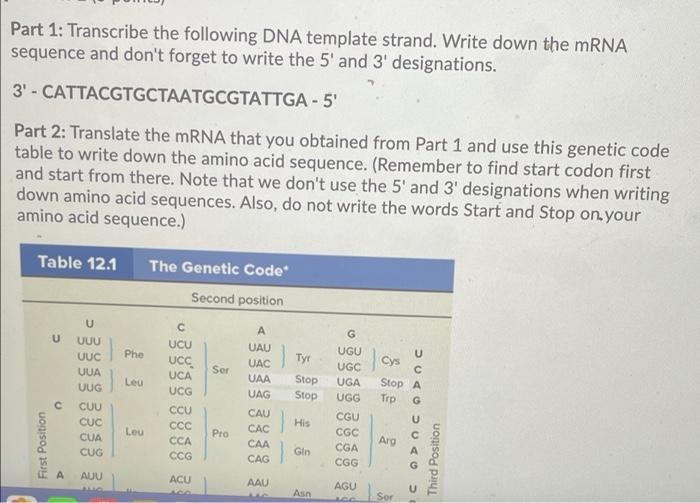
Both coding and template strands are distinct strands of a dna structure. After the process of transcription, the mrna is converted into the mature. Paul sims explains and works out how to start with a template strand of dna, transcribe it to mrna and translate the mrna to a polypeptide. When making rna, u is used in place of t..
Mrna Template Strand

Paul sims explains and works out how to start with a template strand of dna, transcribe it to mrna and translate the mrna to a polypeptide. The template strand’s role in rna transcription is foundational, serving as the guide for synthesizing messenger rna (mrna), an intermediary in genetic expression. Sometimes genes overlap, and in some of those cases each strand.
Solved DNA CodingStrandDNA TemplateStrandmRNAAsn

The coding strand is the dna strand whose base sequence is. Ivt takes advantage of a simplified form of the cellular process to produce rna from a dna template under artificial conditions. Both coding and template strands are distinct strands of a dna structure. In the process of making mrna for protein synthesis, dna's two strands are divided into either.
Answered DNACoding Strand DNATemplate Strand… bartleby

Translates dna or mrna to the other and a protein strand (amino acids). When making rna, u is used in place of t. How do you transcribe dna into mrna? The coding strand is the dna strand whose base sequence is. An enzyme called rna polymerase reads the template dna strand to produce an mrna molecule.
Template Strand To Mrna - The template strand’s role in rna transcription is foundational, serving as the guide for synthesizing messenger rna (mrna), an intermediary in genetic expression. Translates dna or mrna to the other and a protein strand (amino acids). The mrna product is complementary to the template strand and is almost identical to the other dna strand, called the nontemplate strand, with the exception that rna contains a uracil (u). The mrna product is complementary to the template strand and is almost identical to the other dna strand, called the nontemplate strand, with the exception that rna. An enzyme called rna polymerase reads the template dna strand to produce an mrna molecule. They differ only by a few properties and functions. A temperate phage that infects e. The template strand imparts the. This means that if there is an a in the template. How do you transcribe dna into mrna?
In the process of making mrna for protein synthesis, dna's two strands are divided into either template strands or coding strands. The template strand imparts the. When making rna, u is used in place of t. Sometimes genes overlap, and in some of those cases each strand of dna is copied, but each for a different mrna. The mrna product is complementary to the template strand and is almost identical to the other dna strand, called the nontemplate strand, with the exception that rna contains a uracil (u).
Both Coding And Template Strands Are Distinct Strands Of A Dna Structure.
Transcription, however, differs from dna replication in several crucial ways. A temperate phage that infects e. The strand of dna that reads the same as the. The coding strand is the dna strand whose base sequence is.
The Template Strand’s Role In Rna Transcription Is Foundational, Serving As The Guide For Synthesizing Messenger Rna (Mrna), An Intermediary In Genetic Expression.
When making rna, u is used in place of t. They differ only by a few properties and functions. Viruses ii bacteriophage lambda (λ): Paul sims explains and works out how to start with a template strand of dna, transcribe it to mrna and translate the mrna to a polypeptide.
The Template Strand Imparts The.
After the process of transcription, the mrna is converted into the mature. The mrna product is complementary to the template strand and is almost identical to the other dna strand, called the nontemplate strand, with the exception that rna contains a uracil (u). In the process of making mrna for protein synthesis, dna's two strands are divided into either template strands or coding strands. A dna molecule is double stranded.
This Means That If There Is An A In The Template.
Translates dna or mrna to the other and a protein strand (amino acids). How do you transcribe dna into mrna? An enzyme called rna polymerase reads the template dna strand to produce an mrna molecule. The template strand serves as a.